
Marion County Arrest Records and Charges
Marion County arrest records begin on the law-enforcement and detention side. The Sheriff is J. Brian Wallace, and the Sheriff's Office provides law enforcement, detention, court security, and civil services. The Detention Center booking process confirms that the jail database maintains admission, processing, and release records and that booking data can include identification information, charge and bond data, hold and warrant data, detainers, extradition data, photographs, fingerprints, DNA samples as required, property inventory, and medical screening.
Court charges after arrest are different. Once a charge becomes a court case, the court record tracks the filed accusation, charge status, hearings, plea, disposition, sentence, and costs. Booking data can show the initial charge and bond snapshot, but the final outcome belongs in the court record. For current custody and booking lookup, use the Marion County inmate records page; for the full case file and sentencing, use the criminal court records page.
The Marion County Sheriff page is an assigned source for this arrest and charge page.
The Sheriff source anchors the arrest side of the Marion County record trail before the court charge record begins.
Search Marion County Arrest Records
A practical search begins by deciding whether the question is about arrest, custody, charges, or outcome. Arrest and booking records are tied to law enforcement and detention. Court charges are tied to Public Index, Magistrate or Municipal Court, General Sessions, and the Clerk. Statewide criminal-history information is a separate SLED product and should not be used as a warrant search or a complete court-file substitute.
- Check the county detention current inmates and releases page for a custody or recent booking question.
- Search Marion Public Index for court charges, case numbers, docket events, charge status, and dispositions.
- Confirm whether the matter is Magistrate, Municipal, General Sessions, Family Court, or another agency hold.
- Use the Twelfth Circuit Solicitor for General Sessions prosecution, diversion, and expungement questions.
- Request law-enforcement or detention records through the correct office or Marion County FOIA when no public tool gives the record.
The Sheriff's Office homepage is assigned to this page.
That office context matters because court charges often begin with a law-enforcement event, but the charge outcome is decided through court channels.
Marion County Booking Charge Data
The Detention Center does not hold a person without appropriate legal authority or documentation. An arresting agency may place a detainer to obtain charging documents for no more than 24 hours. Booking records are maintained in paper and electronic form. The county booking process says the database feeds MobilePatrol, VINE, and other public-information sites.
The Marion County Detention Center booking process is one of the assigned images.
The booking source supports the distinction between a jail record, which is a custody snapshot, and a court charge record, which tracks prosecution.
| Booking Item | Why It Matters |
|---|---|
| Charge and bond data | Shows the custody-stage accusation and release condition, not the final case result. |
| Hold, warrant, detainer, and extradition data | Explains why a person may remain held even after one bond issue is addressed. |
| Criminal history and identifiers | Used operationally at booking, but public release may be limited by law or policy. |
| Admission, processing, and release records | Feeds public-information channels but does not replace the court docket. |
Charges Filed After Arrest
South Carolina materials in the research identify General Sessions criminal case files, indictments or charging documents, pleas, dispositions, sentencing orders, fines, costs, and docket activity. Marion County is in the Twelfth Judicial Circuit, and the Solicitor prosecutes felony and higher-level criminal matters for Florence and Marion Counties. Magistrate and Municipal Courts handle many lower-level criminal, traffic, and ordinance cases.
| Charging Document | Typical Role | Marion County Context |
|---|---|---|
| Complaint or summons | Starts or supports a lower-level criminal or traffic matter | Often tied to Magistrate or Municipal Court records. |
| Information or prosecutor filing | Reflects prosecutor action on a criminal accusation | Solicitor resources apply in General Sessions matters. |
| Indictment | Formal felony-level accusation | Part of a General Sessions criminal court file when applicable. |
Marion County Charge Status
Charge status can change. A charge may be pending after arrest, amended after prosecutor review, reduced through negotiation, dismissed by court action, or nolle prossed when the prosecutor does not proceed. A single arrest can produce more than one charge, and each count can end differently.
| Status | What It Means |
|---|---|
| Pending | The accusation remains unresolved in the court record or roster. |
| Amended or Reduced | The filed charge changed from the first version, often after review or negotiation. |
| Dismissed | The charge or case ended before judgment. |
| Nolle Prosequi | The prosecutor elected not to continue with that charge. |
| Guilty or Not Guilty | The record reflects a plea or verdict outcome, not just the arrest accusation. |
Charges vs Convictions
Arrest records and court charge records should never be read as convictions without the disposition. A public result may show the charge name before the case is resolved, and that charge can later end in dismissal, not guilty, nolle prosequi, plea, conviction, diversion, or expungement. The final court entry is the better source for outcome.
| Charge | Conviction | |
|---|---|---|
| Meaning | An accusation filed after arrest, summons, warrant, or review | A guilty outcome by plea, verdict, or court finding |
| Can Appear Early | Yes, before final case result | No, only after a qualifying outcome |
| Can Change | Yes, it may be amended, dropped, or dismissed | May be appealed, corrected, or affected by expungement law |
| Best Proof | Charging document and docket | Disposition, sentencing order, and certified copy |
State Charge and History Checks
SLED CATCH is a South Carolina criminal-history search, not a warrant-search tool and not a Marion County court docket. It can help with statewide criminal-history context, but it does not replace the court record for charge status, docket activity, disposition, or certified copy needs. Public Index and the Clerk remain the court-file route.
The SLED CATCH criminal-history search is assigned to this charge-record page.
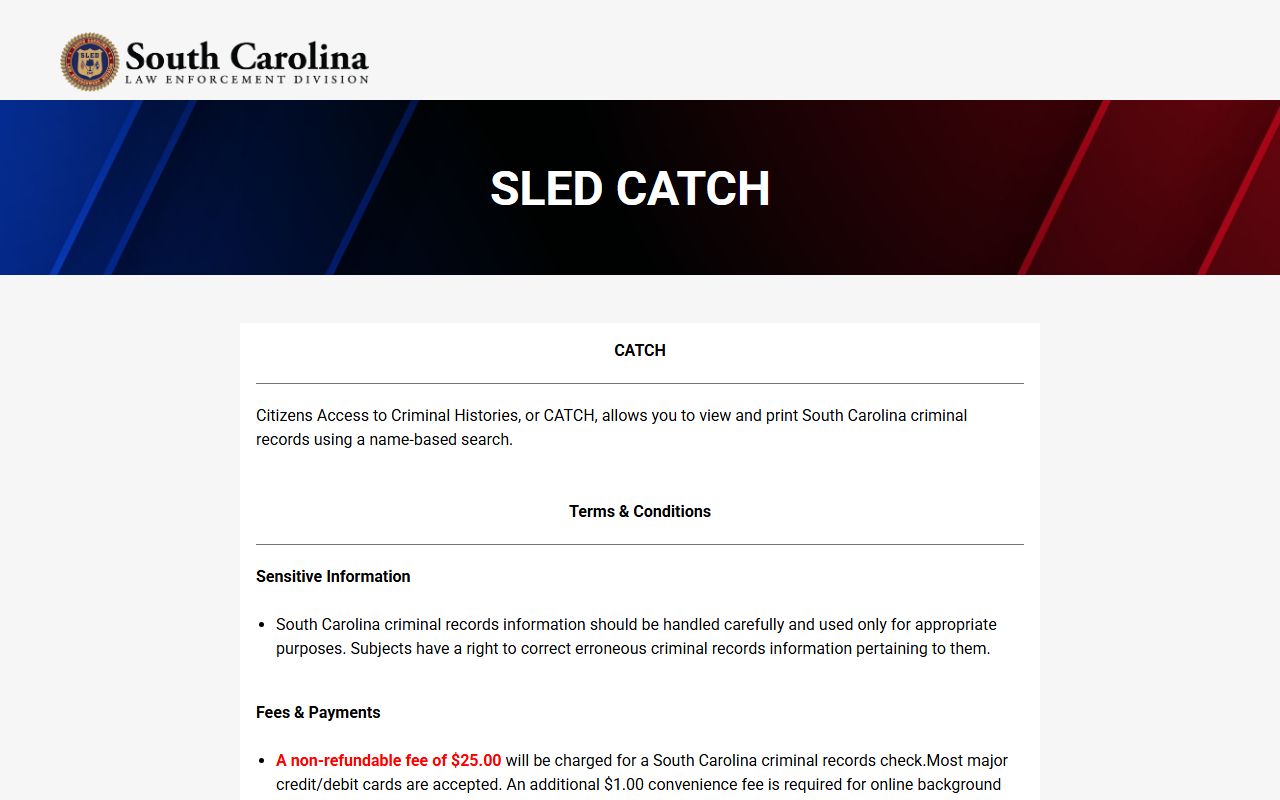
Use SLED CATCH for criminal-history context, then verify the Marion County court charge and disposition through court records.
Marion County Charge Examples
Recent public sources in the research illustrate why charge status and court outcome should be separated. SLED and news sources may report that a person was charged, but a charge announcement is not the same as a final court disposition. The court file is where later pleas, dismissals, nolle prosequi decisions, sentencing, and expungement status must be verified.
The SLED Marion County charge release is assigned to this page.
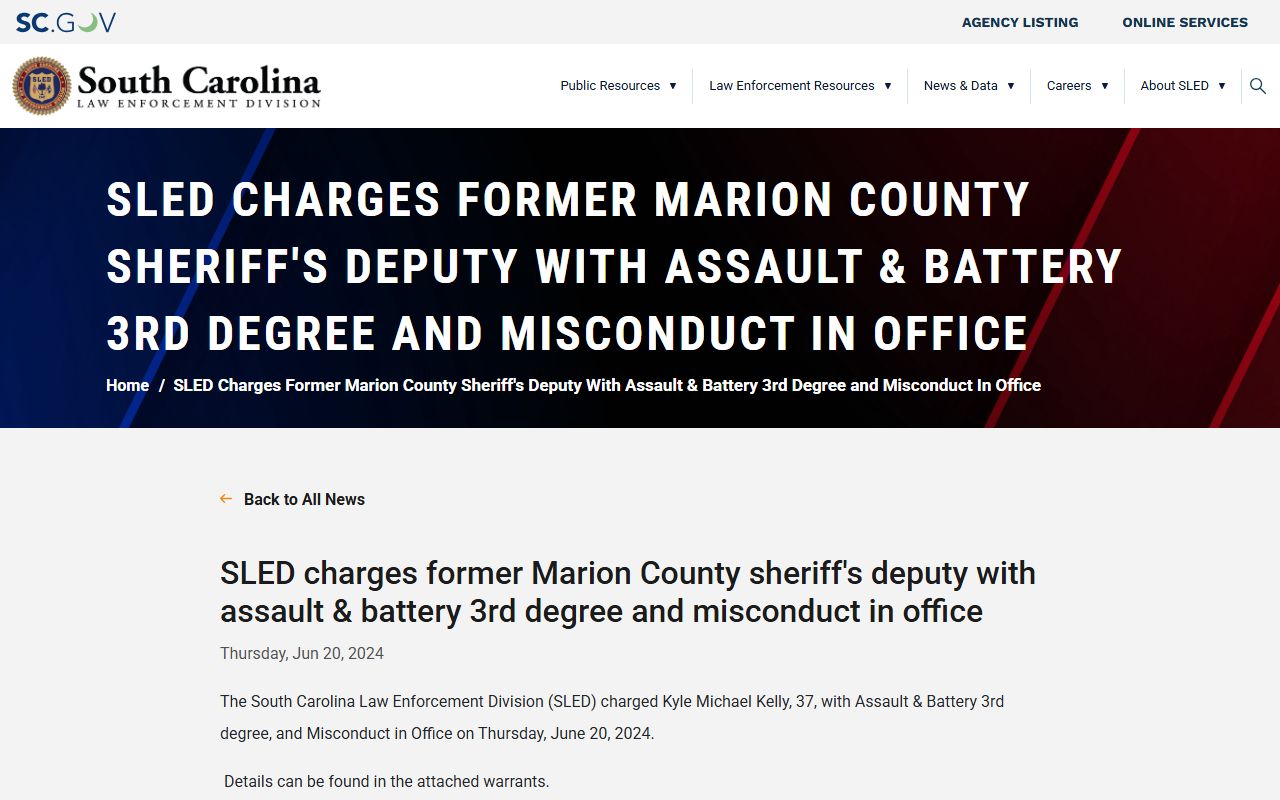
A SLED release can identify a charge event, but the Marion County court record is still needed for the case result.
The WPDE Tubello Court arrest coverage is also assigned to this page.
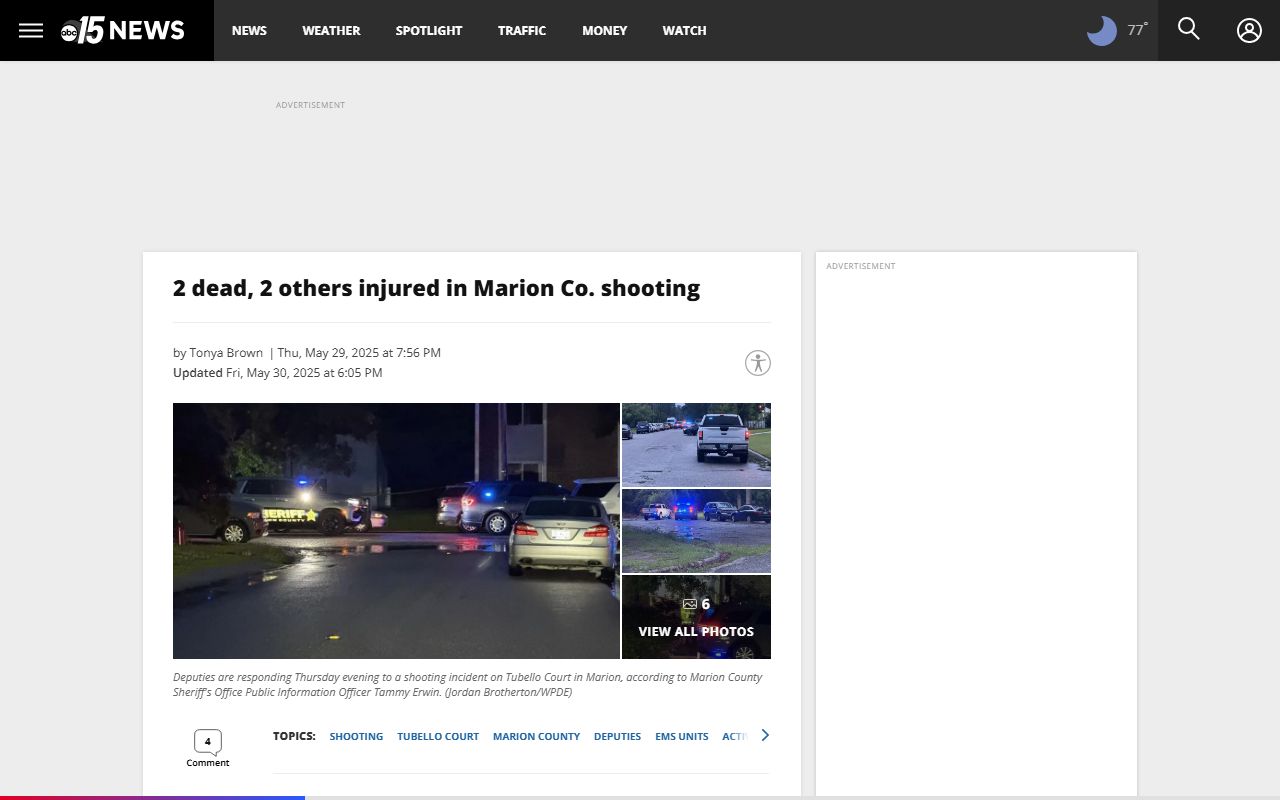
News coverage can help identify names, agencies, and reported charges, but court and detention records remain the official access channels.
Sealed and Expunged Charge Records
South Carolina expungement rules are especially important for arrest records and charges that did not end in conviction. General Sessions expungements start with the Solicitor for the circuit where the offense occurred. For Marion County, that means the 12th Circuit Solicitor. Qualifying summary court not-guilty, dismissed, or nolle prossed charges may be eligible for no-fee removal under the cited South Carolina summary-court expungement law.
| Sealed | Expunged | |
|---|---|---|
| Public Access | Hidden from ordinary public inspection | Destroyed or sealed under an expungement order |
| Typical Cause | Court order, juvenile law, adoption law, or protected details | Eligible dismissal, non-conviction, diversion, or other statutory ground |
| Where to Start | The court with jurisdiction | 12th Circuit Solicitor or the relevant summary court |
| Effect on Online Data | May suppress images or data | Should remove qualifying public arrest or charge records from ordinary display |
Note: Expungement rules can affect arrest, booking, charge, and conviction records differently, so confirm the exact court and charge.
Records Requests for Charge Data
When no public tool gives the record, use the custodian. Court charges and dispositions route through the court system and Clerk. Law-enforcement and detention records may route through the Sheriff's Office, Detention Center, or Marion County FOIA. FOIA requests must be written and can be submitted in person, by mail, email, or fax. The county asks for existing records rather than answers to questions.
Strong requests identify date ranges, names, case numbers, incident numbers, department names, and record types. For law-enforcement or detention material, specify whether the request is for arrest reports, incident reports, booking records, release records, jail logs, civil-process records, or administrative records. FOIA does not override sealed, expunged, juvenile, adoption, mental-health, or protected personal information limits.