
Marion County Criminal Court Records
Criminal court records in Marion County are mainly tied to General Sessions, the criminal side of South Carolina Circuit Court. Marion County is in Judicial Circuit 12. The Clerk of Court is custodian of criminal court documents, collects General Sessions fines and court costs, and processes related court functions such as public defender applications and arrest-warrant paperwork.
Lower-level criminal and traffic matters may begin in Magistrate Court or Municipal Court. Those cases can involve preliminary hearings, bond, bench warrants, small criminal charges, or city ordinance matters. More serious criminal prosecutions route through General Sessions and the Twelfth Circuit Solicitor. A case record should be read as a timeline: accusation, court events, plea or trial result, disposition, and sentence.
The Twelfth Circuit Solicitor serves Marion and Florence Counties and is one of the assigned sources for this page.
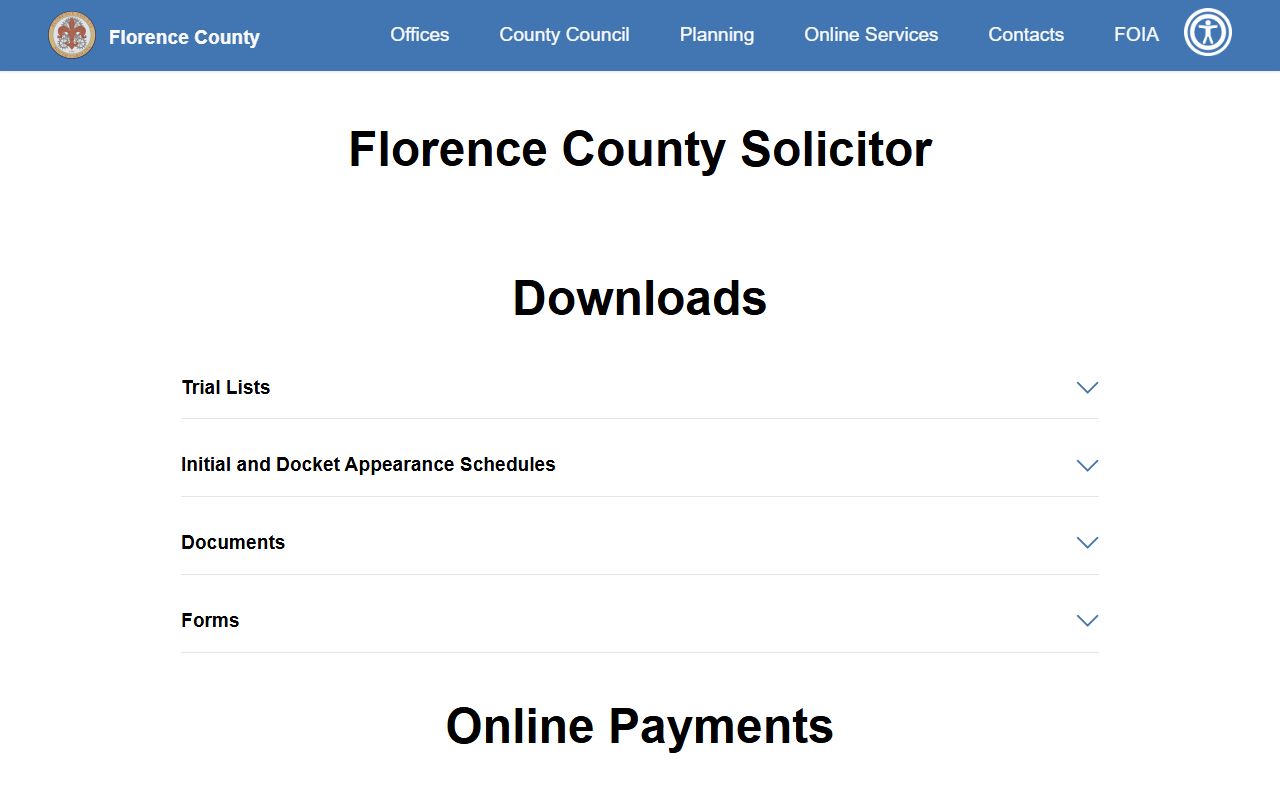
The Solicitor source matters because prosecution decisions, diversion options, and General Sessions resources do not come from the jail roster.
Search Marion County Criminal Records
Start with the South Carolina Judicial Branch case records hub and the Marion County Public Index for public criminal case records. Because the Public Index requires cookies, JavaScript, and sometimes a pop-up exception, a failed browser view does not prove that no case exists. If a case is older, restricted, sealed, expunged, or not fully visible online, contact the Marion County Clerk of Court for the correct copy path.
- Search by the defendant's name or known case number in the Marion Public Index.
- Check whether the case is General Sessions, Magistrate, Municipal, or another court type.
- Read the docket events for arraignment, motions, plea, trial, disposition, sentencing, and financial obligations.
- Use court rosters or Solicitor schedules when the main question is the next appearance date.
- Request certified copies from the Clerk when the record will be used for legal proof.
A General Sessions case number may look like 2025-GS-33-00340. The year starts the number, GS means General Sessions, 33 is Marion County, and the final digits identify the sequence.
Marion County Criminal Case Flow
The criminal court record grows as the case moves. A jail booking entry may show charge and bond data, but the court case file is where arraignment, motions, pleas, trial events, disposition, sentence, fines, costs, and orders are tracked. For a closer look at the charging side, use the Marion County arrest records and court charges page.
Case flow: Charges Filed › Arraignment › Pretrial and Motions › Plea or Trial › Disposition › Sentencing
| Stage | What Happens |
|---|---|
| Charges Filed | The accusation moves from arrest, summons, warrant, indictment, or prosecutor action into a court case. |
| Arraignment | The defendant is informed of the charge and a plea may be entered or scheduled. |
| Pretrial / Motions | Attorneys file requests, raise legal issues, negotiate, or set hearings before plea or trial. |
| Plea or Trial | The case is resolved by plea, trial verdict, dismissal, nolle prosequi, or another court action. |
| Sentencing | The court imposes punishment, fines, costs, restitution, probation, custody, or other conditions after conviction. |
What Marion County Criminal Records Show
Criminal court records may include case number, defendant name, court type, charge or offense, filing date, docket events, bond events, hearing dates, attorney information, plea, disposition, sentence, and financial obligations. Clerk duties also confirm public defender applications, jury activity, bondsman-license filings, and General Sessions fines and costs may intersect with the criminal court file.
| Field | What It Shows |
|---|---|
| Case Number | The court file number, often showing year, General Sessions, Marion County number 33, and sequence. |
| Defendant | The accused person, subject to redaction or confidentiality rules where applicable. |
| Charges | The offense names or counts as filed, amended, reduced, dismissed, or otherwise resolved. |
| Docket Events | Arraignment, motions, continuances, hearings, trial dates, orders, and other case movement. |
| Plea or Verdict | How the charge was answered or decided by plea, trial, or court action. |
| Disposition and Sentence | The outcome and ordered punishment, costs, probation, restitution, or custody terms when public. |
The Marion County public defender contact page is assigned to the criminal records page.
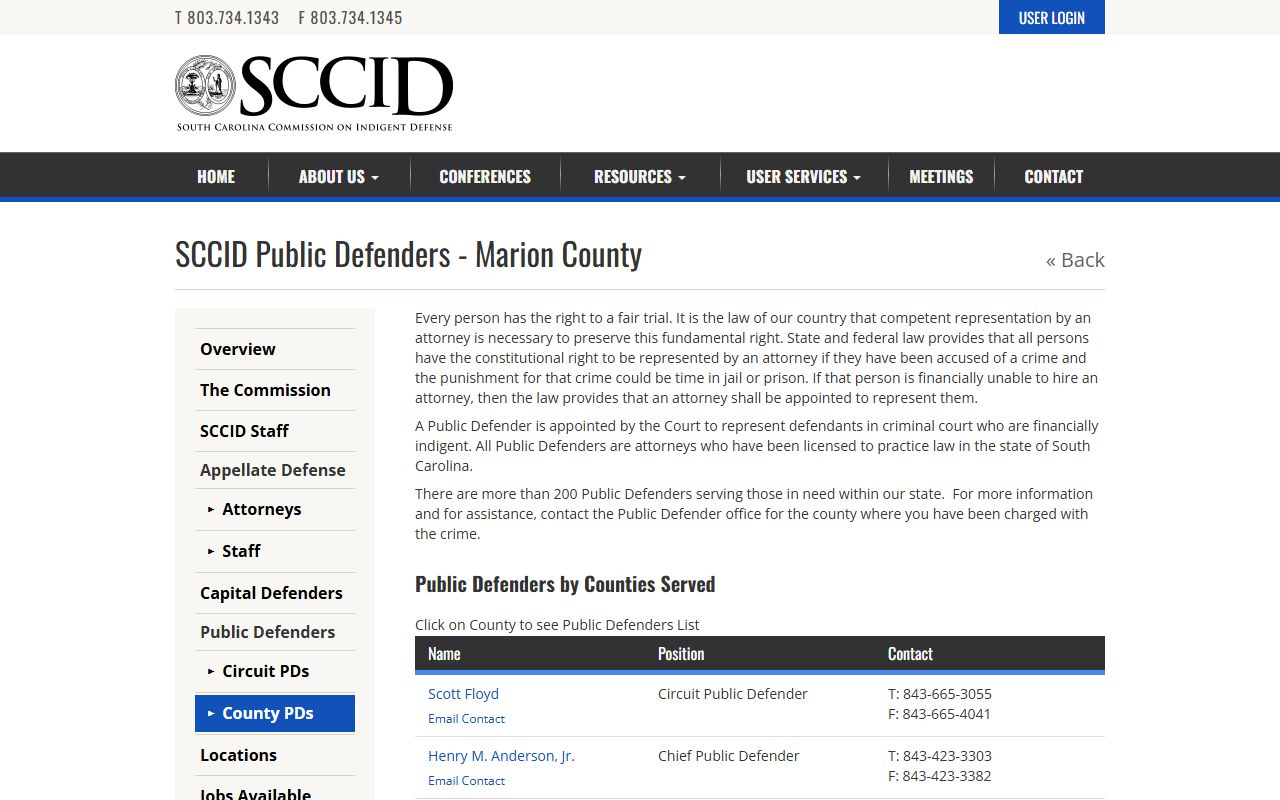
Public defender contacts matter when a defendant needs counsel for the case behind the public docket entry.
Charges vs Convictions
A charge is an accusation. A conviction is an outcome after a guilty plea, verdict, or other conviction event. Marion County criminal court records can show charges that were later dismissed, nolle prossed, reduced, amended, or resolved without a conviction. Reading only the charge name can misstate the case result.
| Charge | Conviction | |
|---|---|---|
| Stage | Accusation or filed count | Final guilty outcome or plea-based result |
| Record Meaning | Shows what was alleged or filed | Shows what the court accepted or found |
| Can Change | May be amended, reduced, dropped, or dismissed | May be appealed, corrected, or later affected by expungement if eligible |
| Where to Verify | Charging document and docket | Disposition, sentencing order, and certified copy |
Marion County Solicitor and Defense
South Carolina uses the term Solicitor rather than District Attorney. The official Twelfth Circuit Solicitor page identifies E.L. Clements, III, also shown as Edgar L. "Ed" Clements, III, as Solicitor for Florence and Marion Counties. Solicitor resources include Marion County trial lists, appearance schedules, criminal warrant information, expungement applications, diversion programs, and program payments.
The Twelfth Circuit Public Defender profile is also assigned to this page.
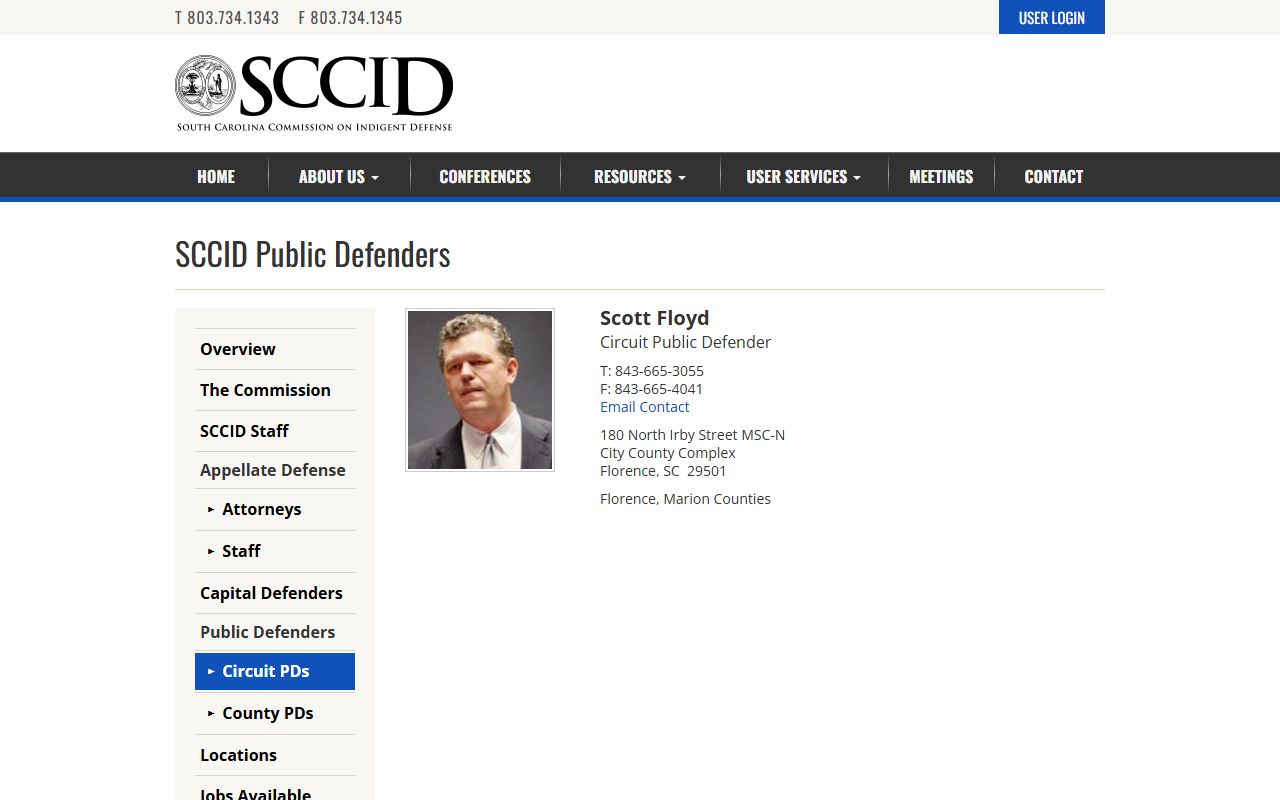
Marion County public defender contacts include Circuit Public Defender Scott Floyd and local public defender office contacts listed by the state indigent defense system.
Read Marion County Dispositions
Disposition terms need careful reading. Dismissed means the case or charge ended before judgment. Nolle prossed means the prosecutor elected not to proceed. Not guilty is an acquittal or non-conviction. Guilty plea means the defendant admitted guilt. Sentence is the punishment or condition ordered after conviction.
Bond information can appear near criminal records but is not the final outcome. Marion County Detention Center materials say bond hearings normally occur at 9:00 AM and 3:00 PM for county and state prisoners, with weekend and holiday bond court at 9:00 AM. Bond can change, and a defendant can still face another hold, warrant, detainer, or NCIC issue.
Sealed vs Expunged Records
Restricted criminal court records include juvenile matters, sealed files, expunged records, and records with protected personal identifiers. South Carolina Judicial Branch materials describe expungement as removing a criminal conviction or charge from a person's record and sealing or destroying state records of arrest, charge, or conviction. General Sessions expungements start with the solicitor for the circuit where the offense occurred.
| Sealed | Expunged | |
|---|---|---|
| Public View | Hidden from ordinary public inspection | Removed, sealed, or destroyed under the applicable order |
| Starting Point | Court order or specific confidentiality law | Solicitor or summary court path, depending on case type |
| Marion Route | Ask the court with jurisdiction | 12th Circuit Solicitor for General Sessions matters |
| Online Effect | May remove images or details | Qualifying public records should not remain ordinary public records |
The South Carolina expungement overview is assigned to this criminal records page.
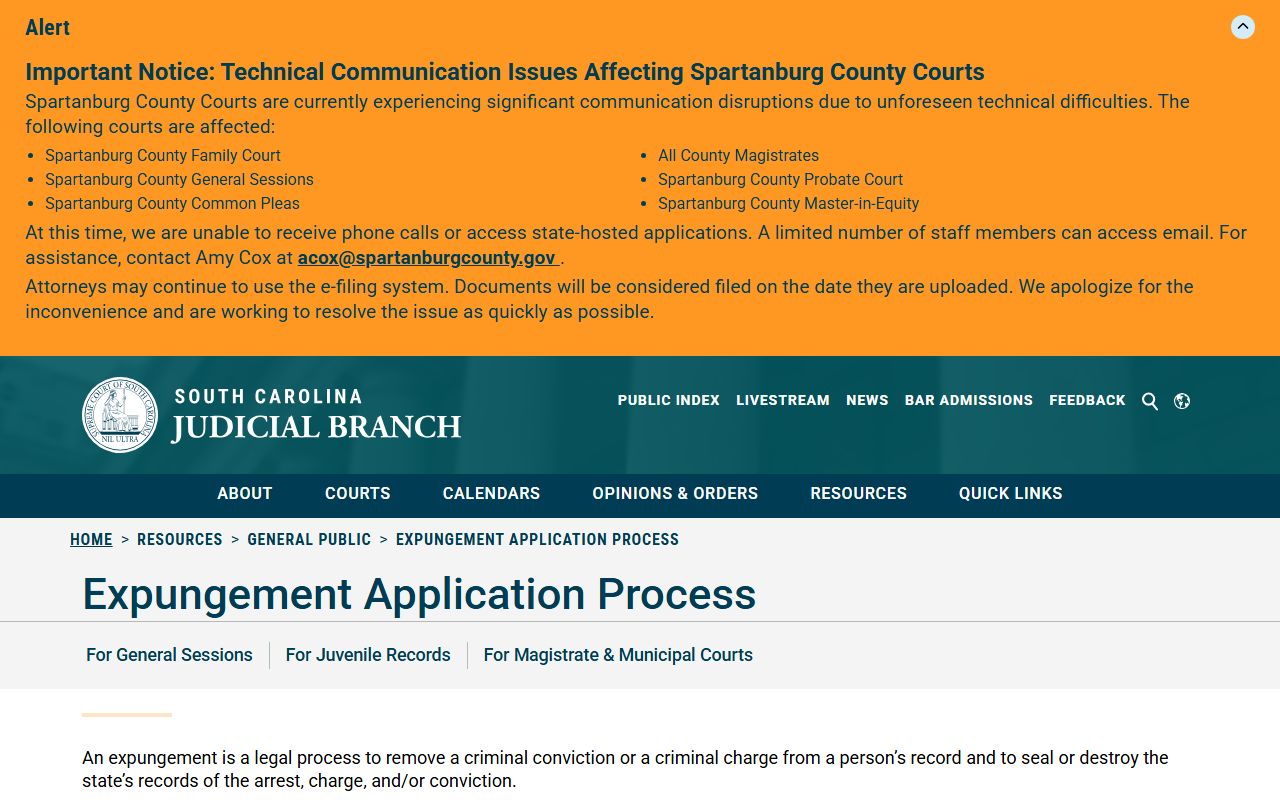
Use the statewide overview to identify the proper expungement path before treating a criminal court record as permanently public.
General Sessions Expungement
General Sessions expungements in Marion County route through the 12th Circuit Solicitor. Judicial Branch materials list potential General Sessions fees, including a $250 solicitor administrative fee, a $25 SLED verification fee when applicable, and a $35 clerk filing fee when applicable. Qualifying Magistrate or Municipal summary court not-guilty, dismissed, or nolle prossed cases may have a no-fee path under the cited summary-court expungement law.
The General Sessions expungement process is one of the assigned criminal page images.
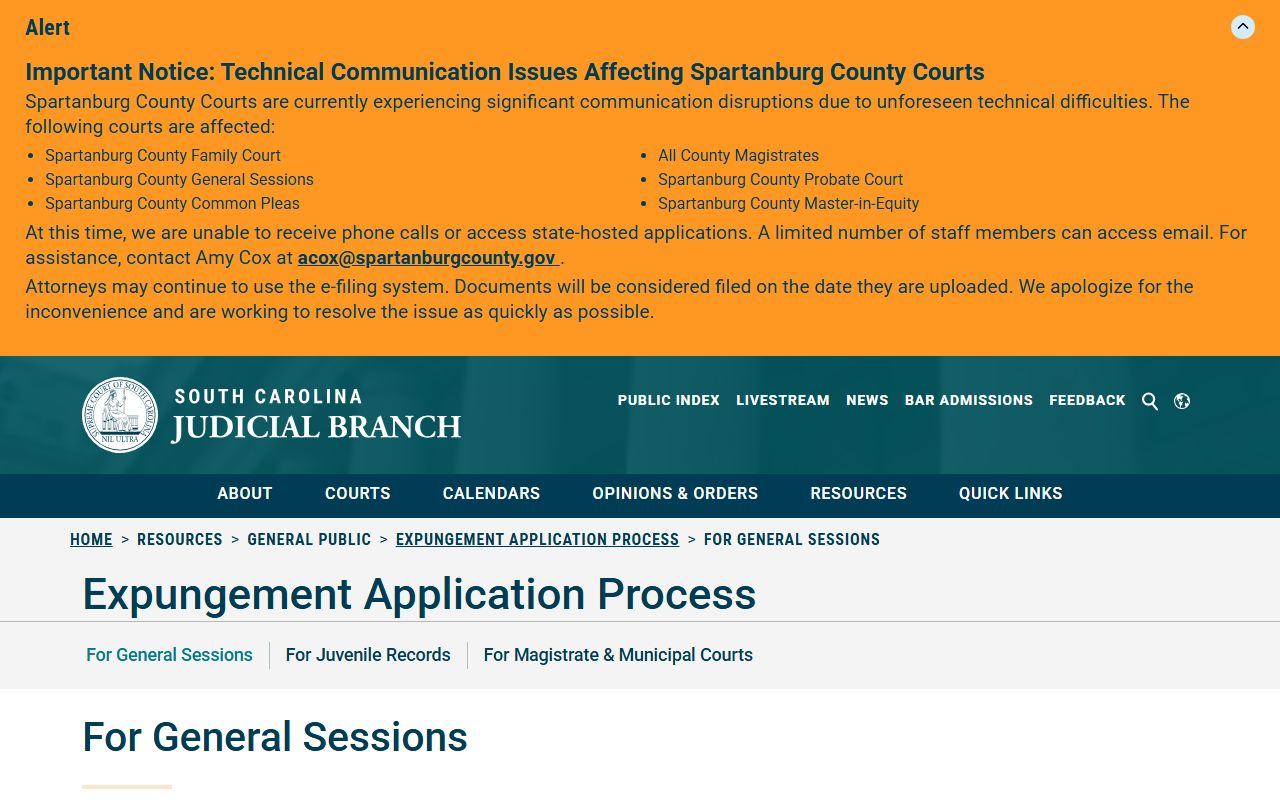
That process is relevant to Marion felony and higher-level criminal cases because General Sessions is the criminal division of Circuit Court.
Marion County Specialty Courts
The 12th Circuit has treatment and diversion options listed in statewide and prosecutor materials, including Adult Drug Court, DUI Court, Homeless Court, Veterans Court, juvenile diversion, juvenile education, juvenile pretrial intervention, and Juvenile Drug Court. These programs can affect how a criminal court record resolves, including possible dismissal or expungement after successful completion when the program rules allow it.
The South Carolina Adult Drug Court information is assigned to this page.
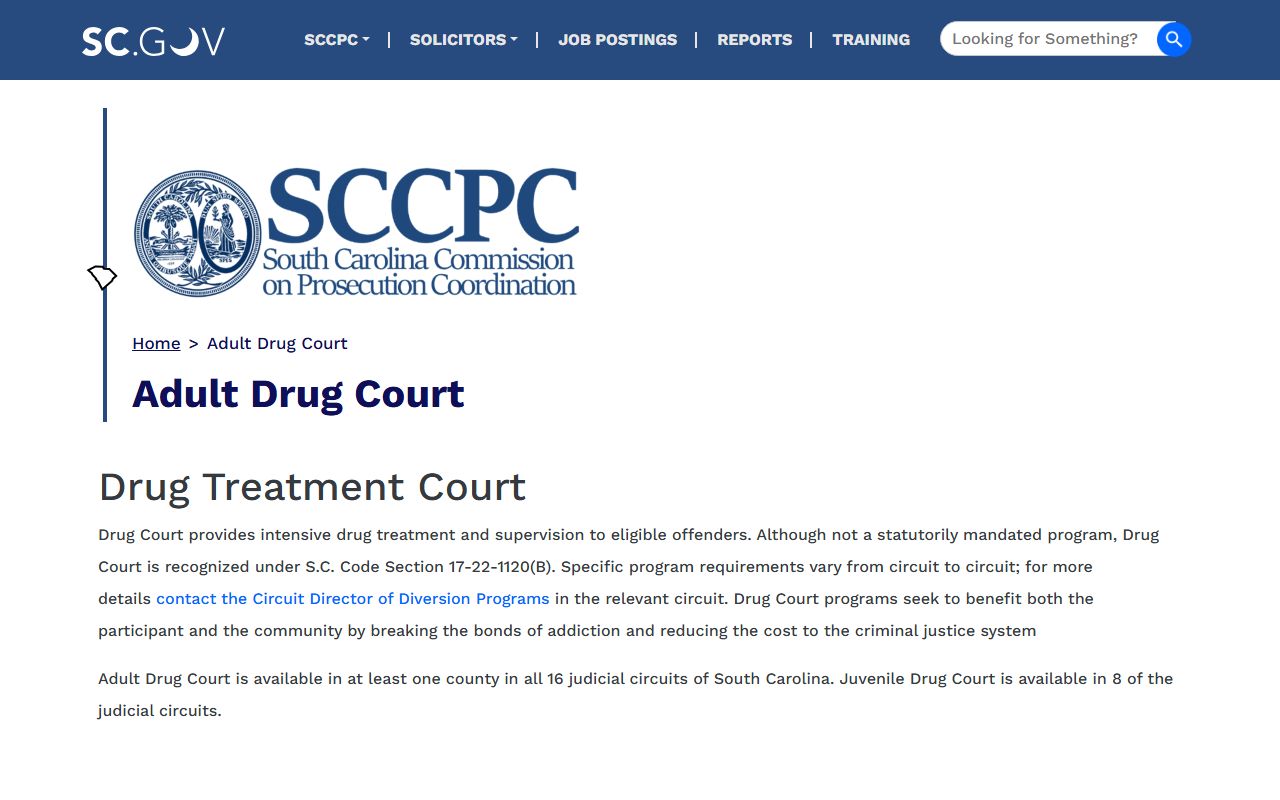
Specialty court references should be read as case-resolution context, not as proof that every Marion defendant is eligible for diversion.
Public Criminal Court Access
South Carolina FOIA and court public-index systems support access to many public records, but criminal court access has limits. S.C. Code Section 17-1-40 addresses destruction or sealing of qualifying arrest and booking records after expungement. S.C. Code Sections 17-22-920 to 17-22-950 address expungement and diversion rules. Juvenile court records are confidential under South Carolina juvenile statutes, and Rule 41.2 controls redaction of protected identifiers in court filings.
Note: A criminal case can be public while a document image, address, identifier, juvenile detail, or expunged record remains unavailable online.